
What It Takes to Re-qualify
Two very different questions get asked in the same breath, almost every time this topic comes up: "Can I get off the high-risk label?" and "Can I get better terms than I'm paying now?" They sound like the same question. They aren't — and conflating them is why so many merchants either give up on ever improving their terms, or waste months chasing an outcome that was never realistic for their situation.
The Two Kinds of High-Risk — and Only One of Them Is Reversible
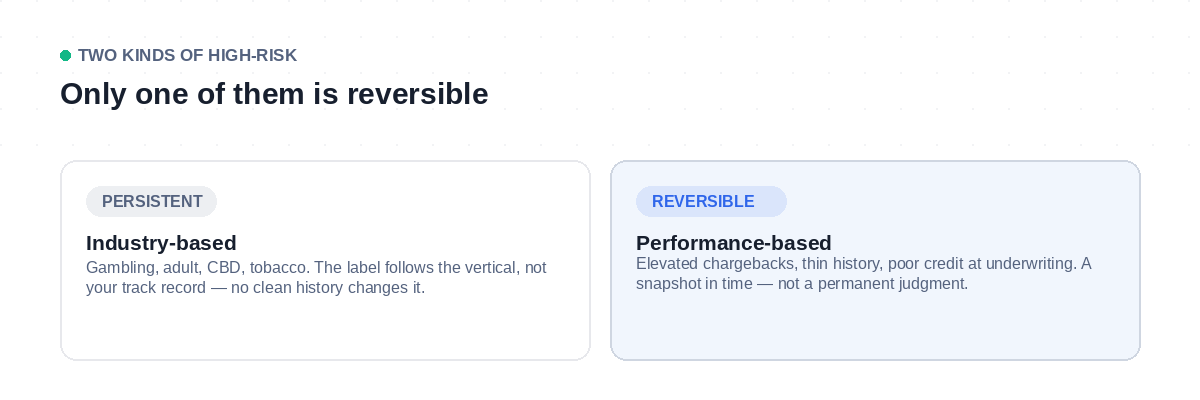
Industry-based high-risk status comes from what you sell, not how you run your business. Gambling, adult content, CBD, tobacco, and similar categories carry the label regardless of your personal chargeback history. Performance-based high-risk status is different, and it's genuinely reversible — it reflects a snapshot of risk at a point in time, not a permanent judgment. You don't need to fully exit the "high-risk" label to get meaningfully better terms; often the goal is "get high-risk pricing that actually matches your real risk."
What "Clean" Actually Means, and How Long It Takes
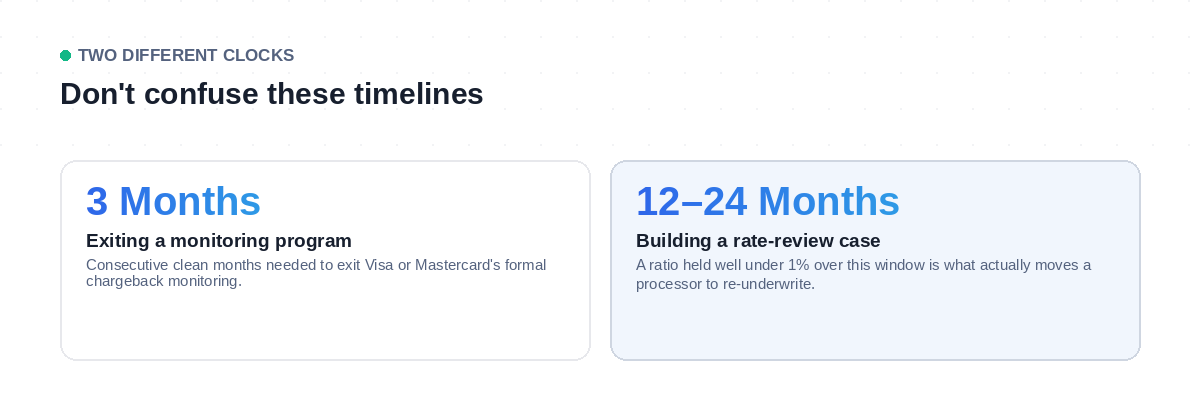
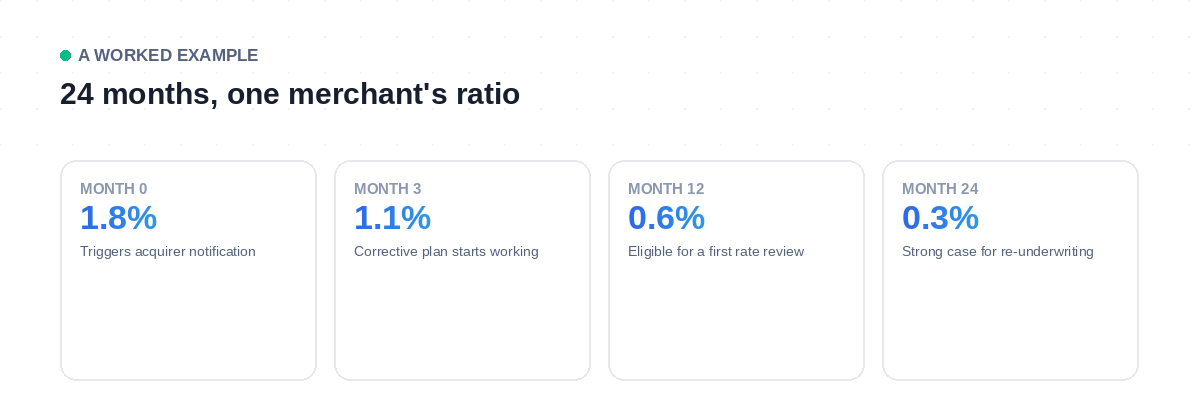
Two separate timelines get confused constantly. Exiting a formal monitoring program is mechanical: Mastercard's Excessive Chargeback Program allows exit after three consecutive months back under threshold. Building a genuine rate-review case is slower — six to twelve months minimum, with a materially stronger case resting on twelve to twenty-four months of a ratio held well under 1%. Visa's VAMP "Excessive" threshold tightened from 2.2% to 1.5% on April 1, 2026; many acquirers set internal alert thresholds around 0.9%, well below that published ceiling.
The MATCH List Runs on a Completely Different Clock
A standard MATCH listing typically runs around five years, with no formal appeal process built into the system. Conflating this timeline with a routine rate-review conversation is the single most common source of frustrated, unrealistic expectations in this space.
What to Actually Bring to the Conversation
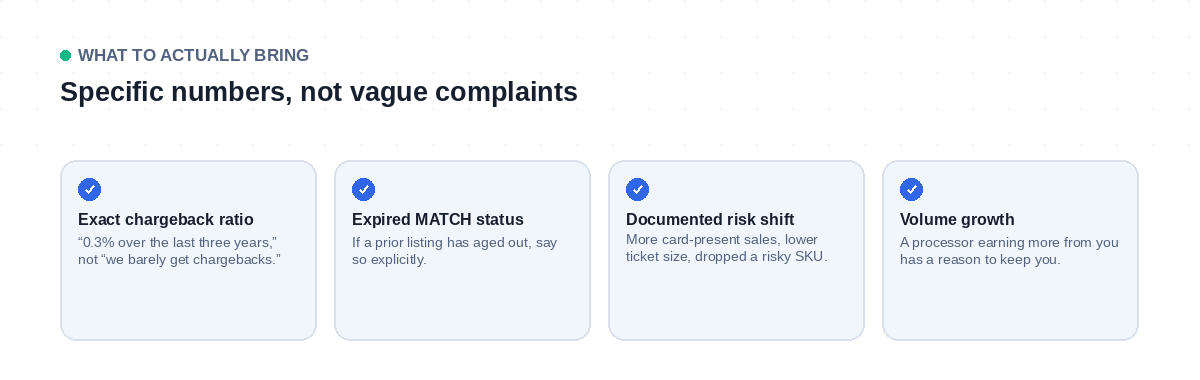
Vague dissatisfaction doesn't move a processor. Specific numbers do: your exact chargeback ratio over a defined period, expired MATCH status, a documented shift in your risk profile, and volume growth.
Why a Processor Even Bothers Reconsidering You
A good account with growing volume and a low chargeback ratio is exactly what a processor wants to keep — losing it to a competitor costs more than the margin given up in a rate adjustment. That's the actual leverage a documented track record has.
What Happens Before You're Even Given the Chance to Improve
Enrollment in monitoring programs isn't automatic on first breach. The first month a threshold is crossed, the acquirer notifies you and requires a corrective plan — typically a three-month window before formal enforcement begins. That window is worth treating as a gift, not a formality.
When It's Not Going to Change — and Why That's Not a Failure
If your industry classification isn't changing, the useful question becomes "how do I get the best terms within that reality" — a specialist processor with real vertical experience will typically outperform a generalist, even though neither changes your MCC.
MMG Corporation works with high-risk merchants across EU markets, including businesses working to demonstrate exactly this kind of track record.
Get in touchThis article was researched and written with the help of AI tools as part of our content process, and reviewed and fact-checked by the MMG team before publication.